
thoughts on BARKSKINS, Annie Proulx

BOOKIES, 9/26/2017 at Deb’s,
1st take summarizing the night’s take on Annie Proulx’s BARKSKINS–input welcome!

Though Joshua McFadden’s SIX SEASONS collection of recipes again got rave reviews, response to BARKSKINS was appreciative but mixed (and the dark-chocolate Barkthins a hit!). Granted the scope—opening in 1693 & following descendants over 300+ years, until 2013, Proulx’s achievement is remarkable. A basic complaint rests with the narrative being not quite strong enough to pull readers through the changes in time and context. The extent of Proulx’s ambition—the scope, range of subject matter: coverage of historic periods, movements, varied “acknowledgements” if not complete exploration of potent subject-areas[child abuse, capitalism, religion, feminism, ecology, Indian Boarding Schools, return from the wars, etc.] generates appreciation for the way she establishes [grim] human patterns over time & place. What could be called redundant or didactic—like the message re: manifest destiny, that 19th century belief that European settlers were destined to expand across North America and make it theirs—feels hammered home to some and to others a greedy approach strongly illustrated. The positives of innovation and progress are set next to the negative example of ALL that is lost. Comparisons are made to TEAM of RIVALS—also offering a clear historic view, & THE GOLDEN SPRUCE, admired for its accessibility & grip.

Readers seem to agree that the book captures (for better or worse) the American spirit of this being the greatest country on earth in many ways while clearly raising the question At What Cost? —leaving Americans with a lot of explaining to do. Proulx covers the many factors that brought [us our] wealth & comfort to live lives of ease or privilege, detailing the pressing movement from East to West, at a deep, lasting cost to the Native peoples, detailing their decimation and forced assimilation. We more often read about native peoples, don’t so often have full characters to know—possible imbalance acknowledged.

It was noted that to some the Forest became a main character, too—or Capitalism: all’s there for the taking: someone may eventually pay, but Now, get what’s there. Proulx’s last scene includes a replayed dialogue between Sapatisia Sel & her ex-: “Can’t we try again/ Can’t we fix what we broke?. . . “ Onehube responds “Some broken things can’t be fixed.” That’s a tough, resonant final note that –like the book—applies on numerous levels: personal relationship, global treatment of natural resources, exploitation of native peoples. Proulx also grants the dangers faced by those who resist, & their vulnerability.

Some skimmed the middle two-thirds or quit the book, wanting stronger women characters sooner or a more compelling narrative. Others were carried by the generational progression & fine writing—seeing it as a strong historical, ecological, feminist novel, thin in spots but not to the point of diminishing the achievement. For sure the genealogical charts of the Duke and Sel families at the back of the book help mightily. Also, those who read excerpts in The New Yorker observed that sections read like little novellas, an easier approach that may be suited to cinematic treatment, too!
Posted in Uncategorized | Leave a comment

Lucia Berlin, Nice to Meet You!

We were all impressed by the talent of Lucia Berlin. Here is a good article from The New Yorker about this under-discovered writer.

http://www.newyorker.com/books/page-turner/the-story-is-the-thing-on-lucia-berlin

Berlin, who was born in 1936, in Juneau, Alaska, and died in 2004, on her sixty-eighth birthday, based many of her stories on events in her own life. One of her sons said, after her death, “Ma wrote true stories, not necessarily autobiographical, but close enough for horseshoes.” Although people talk, as though it were a new thing, about the form of fiction known in France as auto-fiction (“self-fiction”)—the narration of one’s own life, lifted almost unchanged from the reality, selected, and judiciously, artfully told—Lucia Berlin had been doing this, or a version of this, as far as I can see, from the beginning, back in the nineteen-sixties. Of course, for the sake of balance, or color, she changed whatever she had to in shaping her stories—details of events and descriptions, chronology. One of her sons said, “Our family stories and memories have been slowly reshaped, embellished and edited to the extent that I’m not sure what really happened all the time. Lucia said this didn’t matter: the story is the thing.”

Posted in Uncategorized | Leave a comment

Book Reviews

Lab Girl by Hope Jahren

New York Times:  Review: ‘Lab Girl,’ Hope Jahren’s Road Map to the Secret Life of Plants

The Guardian: Lab Girl: A Story of Trees, Science and Love

Morning Edition: Lab Girl’: An Homage To The Wonders Of All Things Green

Lincoln in the Bardo by George Saunders

New York Times:  Review: ‘Lincoln in the Bardo’ Shows a President Haunted by Grief …

From The Atlantic:  Sentimental Sadist: Ghosts and schmaltz haunt George Saunders’s first novel.

Posted in Uncategorized | Leave a comment

Our Souls at Night

Thanks to Deb for this contribution.

Kent Haruf’s final book OUR SOULS AT NIGHT, was completed just before he died–as usual, a wool cap pulled over his head as he typed “blind” his first draft, never looking back to fuss or revise.  Also, as usual, it is written in understated, spare prose, a story set again in his fictitious Colorado small-town of Holt.  Addie Moore comes calling on her neighbor, Louis Waters, who is also a widower, & makes a bold proposition. Finding it difficult to sleep nights alone, she imagines a person beside her in bed could help. The book explores the friendship that develops as they delve into their younger lives (an accident that claims the life of Addie’s daughter paralleled by an affair Louis pursues—neither marriage ever re-stabilizing), regrets & unfulfilled dreams. Although they weather the response of locals, including the gossips & judgmental (+ enjoy dinners w/old Ruth), they have a tougher time with challenges their own families present—rooted in problems they can’t “fix,”  & centered on Addie’s grandson Jamie, who is moved in for the summer while his parents struggle with their marriage. Many adventures follow! The book ends (abruptly?), the main characters—forced apart by family, in touch by phone, speaking about the weather. Strong risk-ready Addie, manipulated by her unhappy son & desperate to maintain her relationship with grandson Jamie, has given up her home & is confined to an isolated care-unit.  We’re left with “two old people talking in the dark.”

Reviewer Erin Kodicek, saysOur Souls at Night was inspired, in part, by Haruf’s own marriage & the intimate, late-night conversations he & his wife relished . . . And just like Addie and Louis, Haruf proved that you’re never too old to reinvent yourself, take risks, find love, & write a great novel.”  Not all the Bookies agree on that assessment of the book. Some consider it a book of tenderness, insight (Haruf knows small towns!), & heartbreak. Others found it to lack nuance and felt manipulated by Haruf throughout.

Regardless of our hits on the book as a whole, we are unanimous in characterizing this as “one of the best discussions in a long time.” Noting that this book was written by a man, we asked how many women at the age of 70 would answer loneliness by turning to a new relationship with a man, or whether most women at that stage would turn to “Old Woman” traditions not shared by Old Men. This led to an intriguing conversation about ourselves, older women in general, + courage, openness, second chances & “women having something to offer at all ages

“ —grandparent roles figuring in the cycle, too (as with Addie’s grandson, Jamie, his well-being affecting Addie’s perspective).

The Witch of Blackbird Pond came up, too (a favorite of Margie’s)—maybe one to check out.

Posted in Uncategorized | Leave a comment

The Underground Railroad

From Kim:
I just read in my Dickens collection the chapter in his book American Notes on Slavery. I thought it might be of interest to some of the Bookies after recently reading The Underground Railroad. I guess this is what Brits thought about America in 1842 when he wrote what is otherwise a travelogue of his visit to the US.
Here is the link:
Posted in Uncategorized | Leave a comment

Upcoming Events

Portland Arts and Lectures Series:

The series begins on October 20 with Louise Erdrich, whose most recent novel, LaRose, is the conclusion of a loose trilogy that includes National Book Award winner The Round House and Pulitzer Prize finalist The Plague of Doves.

Don DeLillo, the author of 16 novels including the National Book Award-winning White Noise, will appear in conversation with filmmaker Noah Hawley on November 17.

Irish writer Colum McCann, whose novel Let the Great World Spin won the National Book Award and the Dublin Impac International Prize, will join us on January 12.

Poet Tracy K. Smith, author of the critically acclaimed memoir Ordinary Light, a finalist for the 2015 National Book Award, and the Pulitzer Prize-winning collection Life on Mars, will speak on February 16.

The series will conclude on April 11 with physician, scientist, and writer Siddhartha Mukherjee, best known for Pulitzer Prize-winning book The Emperor of All Maladies.

Posted in Uncategorized | Leave a comment

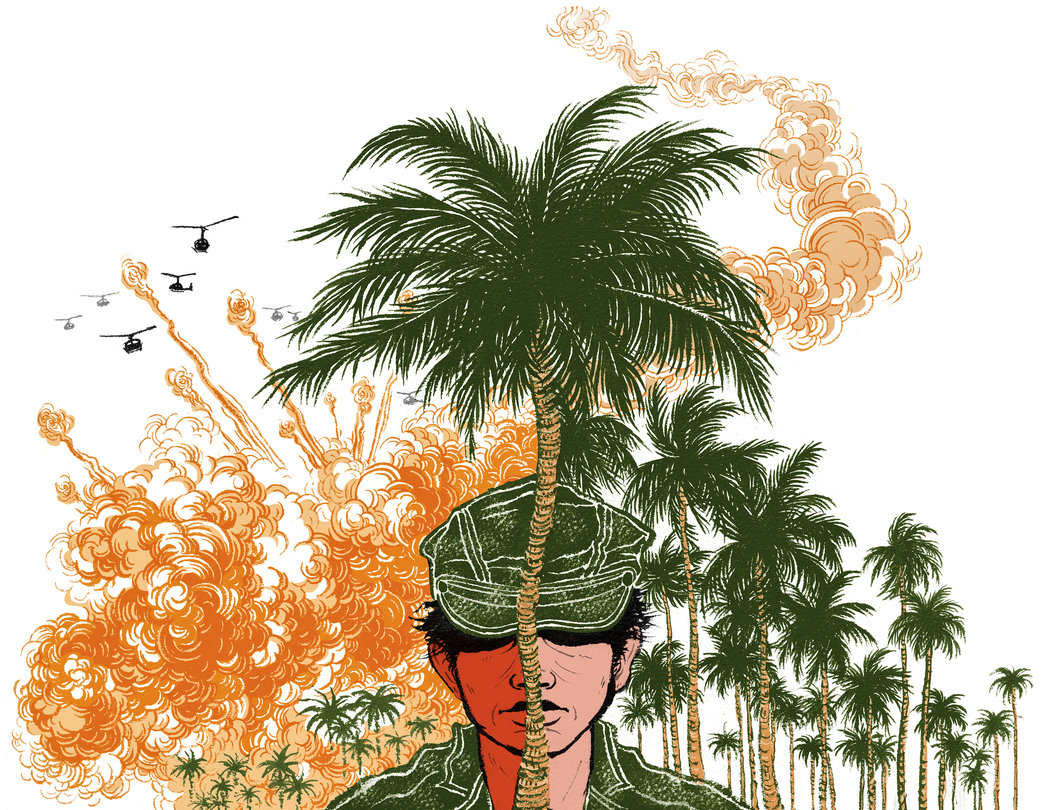
Reviews of The Sympathizer


05-CAPUTO-master1050

The New York Times: http://www.nytimes.com/2015/04/05/books/review/the-sympathizer-by-viet-thanh-nguyen.html

The Guardian: https://www.theguardian.com/books/2016/mar/12/the-sympathizer-viet-thanh-nguyen-review-debut


Posted in Uncategorized | Leave a comment

June 2015 NPR interview with Etgar Keret!

Hi Bookies, Eager to talk about THE SEVEN GOOD YEARS later this week, or next, I’m hoping we’ll have a full table–and in case you’re curious, here’s a chance to hear Keret speak:
http://www.npr.org/2015/06/13/413911492/seven-good-years-between-the-birth-of-a-son-death-of-a-father

Posted in Uncategorized | Leave a comment

Colum McCann’s Radical Empathy

Always such a special night when we gather for a tasty dinner (which tonight’s definitely was–plus whiskeyed cake dessert–with thanks to Mary Ann & Jessica!) together AND a fine book. Trying to learn more about McCann’s Radical Empathy group, I ran across this article for the NY Times Magazine in 2013. Although I recall the photo of his writing closet, I hadn’t remembered the part about his father-in-laws shoes until I reread it, found the whole article of more interest now, after reading Trans Atlantic, & thought others might like a look, too:

Though I don’t know why this doesn’t become a direct link, it seems to copy OK!


Posted in Uncategorized | Leave a comment

Notes for 1/26/16–Obioma & Membership!

BOOKIES 1/26/2016 delayed (which is never good for accuracy—sorry) notes
additions & other impressions or corrections welcome & needed!

Book discussion of Obioma’s ambitious first book THE FISHERMEN—childhood in the ‘90’s in Nigeria, when boys grow old fast—Ben entering prison at 10, exiting at 16?!
A tale of young brothers—dyadic relationships & familiar family push/pull dynamics complicated by the strict father’s departure from home to work in the city, interlaced with cultural tales that stretch into the realm of magical-realism while exploring the lines of sanity as we follow the mother’s attempts to keep them on set paths to become professional men, not fishermen but oh, that’s not to be so with the madman Abulu entering in to speak his curse & carry the Cain/Abel tragedy into the family in Akure. Each of the 18 chapters is introduced by a creature, symbolic and culturally linked to a character: Ikenna the python, Mother a falconer, etc. —a curious & effective device to anchor chapters & maybe simplify complex relationships?

Lots of angles discussed, PLUS we took up a couple other key topics, too (sorry to be slow reporting back on these, Sandy, but Laura got the book titles posted [+ got LOTS of thanks from us for the super new site!] and here finally, is my take):

Clarified Cai’s “departure” as a more intermittent status:

—she explained that she’s at a place reading several books at once & not always able/wanting to finish books that aren’t holding up, has an interest in continuing with the group on some level but not as a regular; this seemed workable. [Then today I talked w/Hue Ping at White Lotus, who suggested The Hare with Amber Eyes: A Hidden Inheritance, which looks good, could be a nice enlargement?]

“EMERITA status” explored: a looser presence, recommending books & attending when there’s a match of interests & commitment to at least a solid sampling—a possibility with long-time members: Cai a founding Booky! [history reviewed—add to blog?!]

SIZE of group also discussed. & adding a new person. For people attending, sense was to add one at the most, and maybe another not really needed. (Agreed attendance best w/a minimum of 4; usually have 5-6—& great when more! Seems good as is.)

Yet AGREED: offer one invitation to play-writer UO prof neighbor of Margie, Theresa May who seems like she would be a strong addition.

Both Cai and Margie will speak with her.

[2/19 addition: Cai hasn’t, suggests I or someone else do this. Margie?
—or talk again next week at the February meeting?]

What else? We never left the table, were well catted, with carrot cake for the b’day trio: Laura, Catherine, & Cai, with wishes earned but no picture to prove it!

     New photos in order! –maybe some Patty poses ahead . . . ?


Also, the article I mentioned on translation is Teeth Marks: The Translator’s Dilemma by Chigozie Obioma, POETS & WRITERS, Jan/Feb 2016.   “A Nigerian-born author and professor provides an in-depth look at two versions of the same text, one in the original Yoruba, and an English translation by Nobel Prize–winning author and translator Wole Soyinka. In his comparison of the two, Obioma poses the question: Is the writer who translates another writer preforming an act of creation or destruction?” It’s another dimension of Obioma that’s nice to take in with this book!

http://www.pw.org/content/teeth_mars_the_translators_dilemma

Posted in Uncategorized | Leave a comment